

¿첥ÊÓƵ’s free Microlecture Series in Sustainable Living is an innovative, interdisciplinary and open access program that gives participants the opportunity to earn a first-of-its-kind digital badge in sustainable living.
Throughout the Microlecture Series in Sustainable Living, six of ¿첥ÊÓƵ’s world-renowned experts share research, thoughts and advice on a range of critical topics related to sustainability. Their leadership and expertise, however, extends beyond the six-minute presentations.
Over the next six weeks, YFile will present a six-part series featuring the professors' work, their expert insights into York’s contributions to sustainability, and how accepting the responsibility of being a sustainable living ambassador can help right the future.
Part one features Associate Professor Eric Kennedy.

Eric Kennedy is an associate professor in ¿첥ÊÓƵ’s Disaster & Emergency Management program in the Faculty of Liberal Arts & Professional Studies (LA&PS). His research focuses on how to: improve decision-making in emergency contexts; enhance disaster training; create better policies for preventing and responding to emergencies; and improving research and evaluation methods in disaster contexts.
Kennedy runs the (Collaboration on Emergency Management, Policy, and Preparedness Research), and is associate director of Y-EMERGE (York Emergency Mitigation, Engagement, Response and Governance Institute). He teaches classes on qualitative methods (including surveys, interviews and research design), science policy and science and society. Kennedy organizes and teaches an annual eight-day bootcamp for graduate students from across Canada (called Science Outside the Lab), which runs in Ottawa and Montréal each May.
Q: What does it mean to be a “sustainable living ambassador” and how does it foster positive change?
A: We’re living in an era of dramatic environmental change and social fragmentation. We have significant opportunities to build a better world – one where everyone has access to abundant opportunity, health, travel, community, energy and happiness. But, we’re also reminded of the vulnerability of many of the things we hold dear: a healthy environment, a solidaristic society and trusted institutions.
I think sustainability means facing these challenges head on. It means playing our part in building systems, infrastructures and communities that advance priorities of equity; creating a society that cares for faraway neighbours and future generations. It means finding ways to create equitable abundance and opportunity for all, human and non-human alike. It means preparing for the ways that our actions might come back to haunt us, whether in cataclysmic wildfires or zoonotic spillovers. And, it means seeing the big picture and fighting for collective, pro-social responses.
Q: What would make you most proud for viewers to take away from your lecture, and the series as a whole?
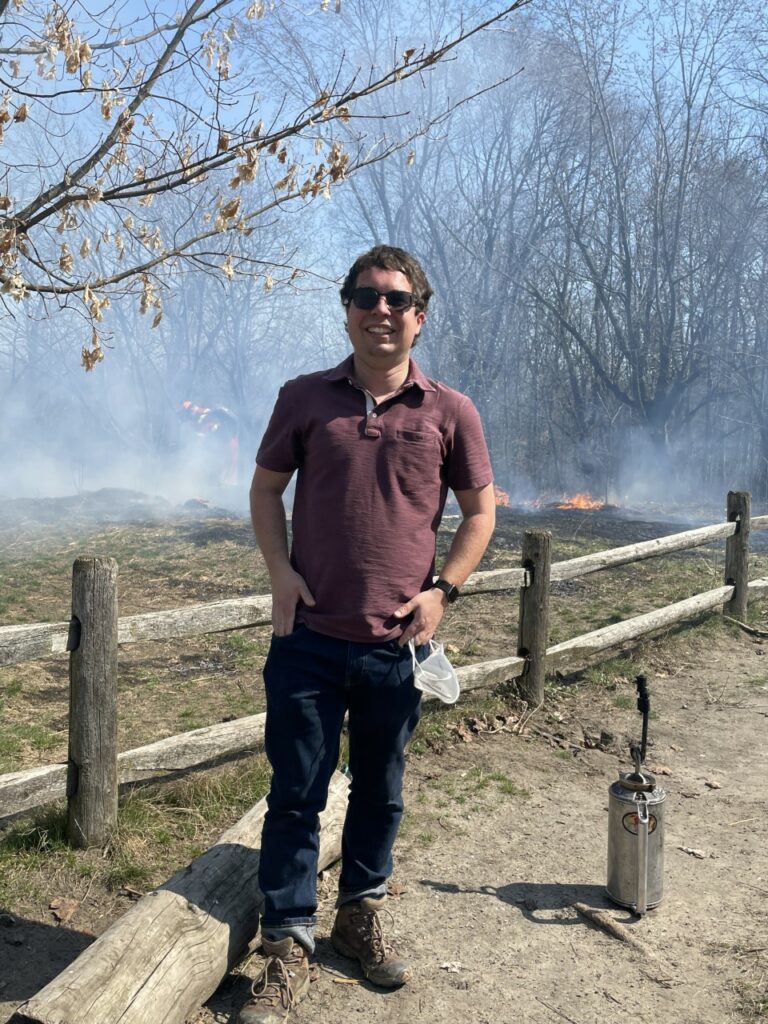
A: At its core, my lecture is about the difference between a hazard and a disaster. In the case of wildfires, which is a topic I spend a great deal of time working on, a hazard might be the "fuel" (trees, shrubs, debris, homes and other flammable materials) located in a forest. This is the potential for a forest fire. But, in many ecosystems, fires are natural and good. It’s only when they adversely affect the things we care about – a community or air quality, for example – that they become a "disaster." And, disasters are amplified or mitigated by the choices we make as people: whether we invest in preparedness, whether we build for resilience, and whether we respond with compassion.
As you watch these lectures, consider these human interconnections. It’s easy to think about "nature" or "the environment" as something out there, detached from us. But, humans and the environment are inseparable and deeply interconnected. There’s no cleanly drawn line between the two. Instead, we must learn to love this inexorable connection, and find ways to love and care for each other and this world.
Q: Equity and equality are a common theme throughout these sustainability lectures. Why is that such a critical component of sustainability?
A: Disasters provide a powerful window for revealing and amplifying inequalities. We’ve seen this in COVID: by and large, those with economic and social privilege had much more opportunity to protect themselves, shelter from exposure, and even benefit from the pandemic. Even in here in Toronto, the location of vaccine clinics and the ease of getting tested wasn’t equitably available, nor has it been equally easy for folks to access the best treatments and protective tools. Those of us with privilege were often more able to work from home – and even continue those arrangements in hybrid ways to this day. And, these effects are only amplified when you look at the benefits that have accrued to the richest of the rich.
In other words, disasters often both show us how inequitable society and opportunity is… and often make those differences and outcomes even worse. The bidirectionality of these impacts is true of sustainability more generally too: it’s often elements of privilege that afford the ability to both protect oneself against adverse environmental impacts, as well as contribute to environmental protection. To understand and address disasters and sustainability means grappling with inequity in all we do.
Q: Are there changes you’ve made in your work or daily life that other York community members can learn from?
A: I’ve always tried to live out my personal sustainability values in my work life, such as in choosing to commute only by public transit or cycling from downtown. Another huge decision for sustainability has been living in an urban environment, which allows us to walk, cycle and use public transit for the vast majority of our mobility. (This is also a great example of the connections between inequalities, privilege, and sustainability – we need to make it far easier for everybody to have the opportunity to live in walkable, non-car-dependent communities, not only the most privileged.)
That said, I also try to use my roles at York to focus on the collective and systematic. It is the systems-level changes that we make that will allow us to live sustainably: creating opportunities for people to choose more environmentally friendly modes of transportation or ways of living, for example. Focusing on individual, consumeristic changes can often obscure the much more critical system-level questions.
Q: How do you view collective responsibility vs. personal responsibility in creating a more sustainable future?
A: Disasters are exceptional illustrations of why the individualization of responsibility is so problematic. Downloading responsibility to individuals is a common part of the consumeristic, neoliberal logics that pervade our modern life, but it’s a path to failure in disasters and sustainability alike.
COVID is a great example of this, of course: We know that individual behaviours, like wearing a mask, can be incredibly effective at protecting ourselves and others. We know that more people died of COVID in 2022 than either 2021 or 2020. And, we’ve learned more than ever about COVID’s long-term impacts on brains, lungs, hearts and immune systems, just to name a few.
But, you now see far fewer people wearing masks than in years before. And, it makes sense: we want to eat and drink indoors; we don’t think they’re super fashionable; they can feel stuffy and uncomfortable; and peer pressure can be a powerful beast. Trying to solve a collective problem through individualistic action is not just an uphill battle, but it also amplifies inequality (who can afford masks?) and can be borderline impossible (we want to share food and drink in close quarters).
Instead, we need to reorient our problem-solving efforts. For example, how do we need to reengineer our spaces to allow us to safely eat at a common table without sharing our viruses? How do we need to change building codes to spaces safe for all? In other words, instead of downloading the problem to individuals, how do we need to come up with systemic solutions?
Same goes with other topics in sustainability. For example, we want people to travel in environmentally friendly ways… but that requires infrastructure improvements like high-speed electrified rail, not just better personal choices.
Q: How is York leading the way towards a more sustainable future?
A: I think most universities are helping us learn about human and environmental systems, create more sustainable technologies and sensitizing students to the importance of these challenges. But, I think York is especially well-positioned in contributing to the human and social dimensions of these challenges: developing the political dimensions, equality and justice, and collectivist and systemic responses. And, it’s home to some exceptional interdisciplinary collaborations, such as an exceptional program in Science and Technology Studies, which helps us avoid greenwashing and be more thoughtful in our development and adoption of technologies. Likewise, the new Y-EMERGE institute is home to interdisciplinary thinking that brings together social, legal, environmental, engineering and scientific dimensions of emergency management.
And, I hope York can keep up its ongoing commitment to building more sustainable systems for our community, too, by making it easier for all of us to commute, travel, and live in sustainable ways. We’re well-positioned to keep contributing to these systems, innovations and transformations.
Visit the Microlecture Series in Sustainable Living to see Kennedy's full lecture, as well as those by the other five experts, and earn your Sustainable Living Ambassador badge. Watch for part two of this series in an upcoming issue of YFile.